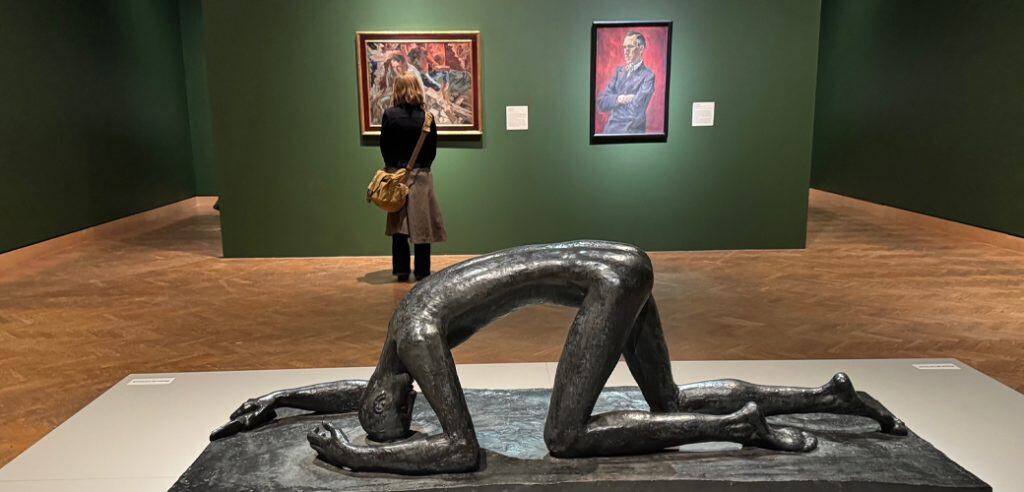
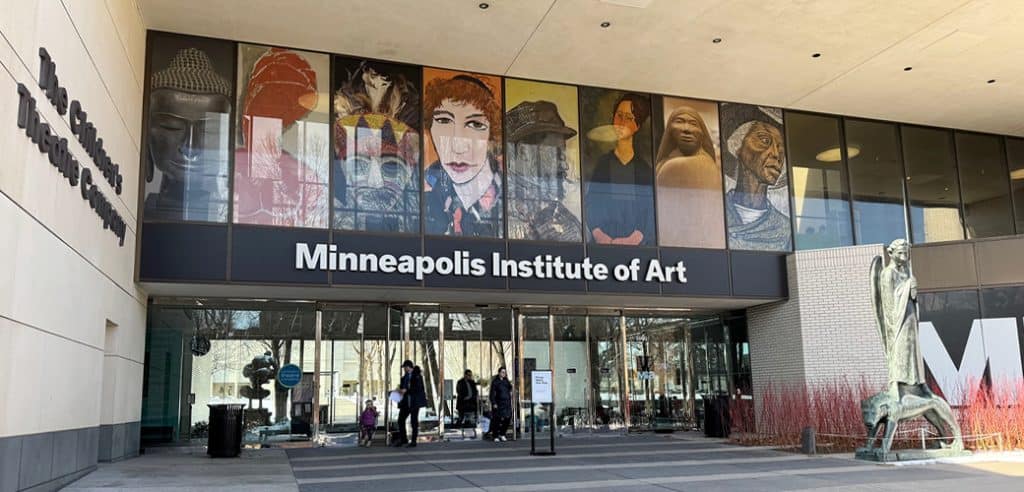
From antiquity to the present day, artists have drawn inspiration from the political climate, perhaps nowhere more evident than in Germany about 100 years ago. A current exhibit at the Minneapolis Institute of Art (MIA), Modern Art and Politics in Germany 1910–1945: Masterworks from the Neue Nationalgalerie, Berlin, is a rare opportunity to see works from the Berlin museum of art of the 20th century while their home museum, designed by Mies van der Rohe, is being renovated.
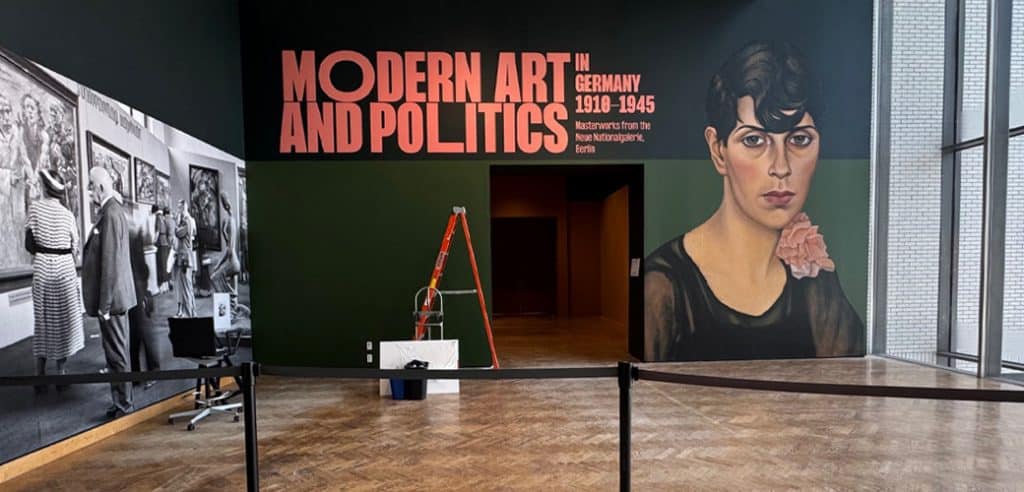
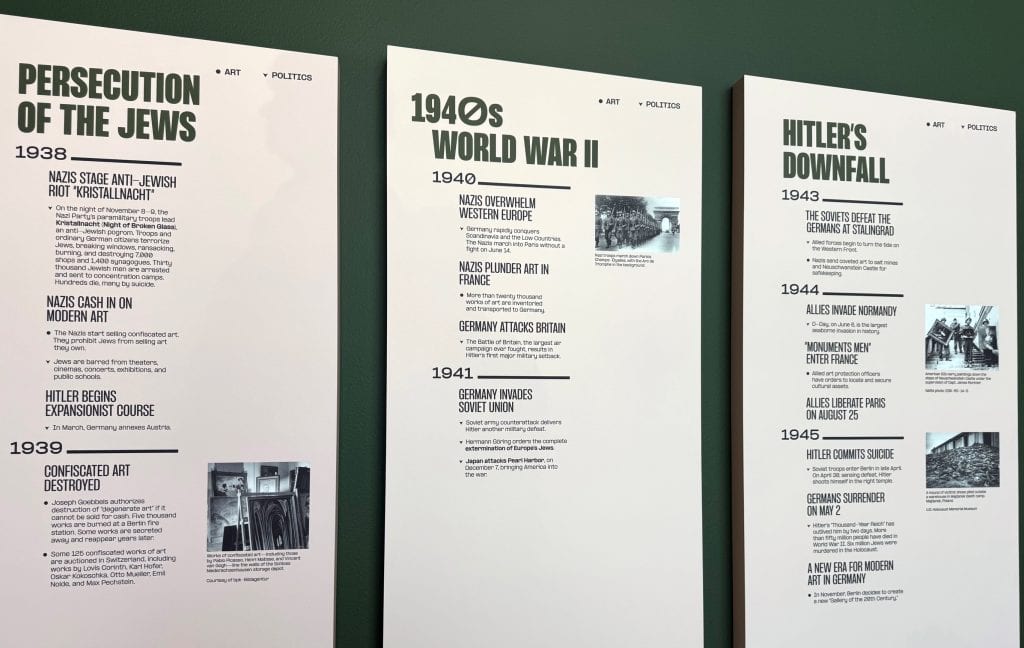
I saw them preparing for the exhibition in February, when they already had the information panels about the timeline of events in that 1910-1945 period. It is disquieting how many parallels there are with what is happening now.
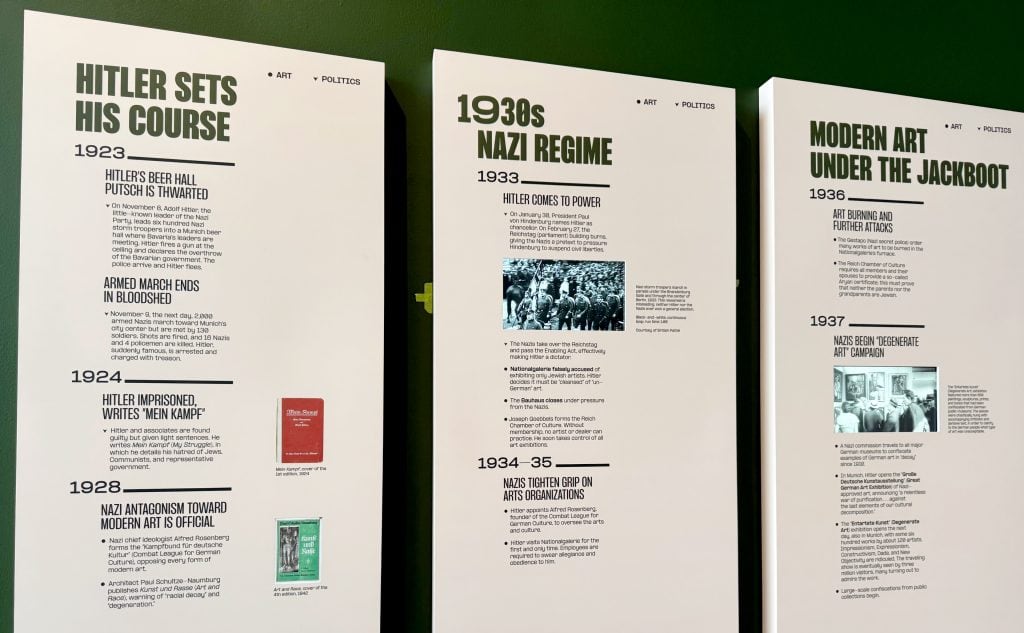
Even before Hitler came to power, Nazi ideologists were opposing every form of modern art, warning of ‘racial decay’ and ‘degeneration.’ Once in power, Hitler appointed his own head of arts and culture, and required employees of the Nationalgalerie to swear allegiance and obedience to Hitler. They confiscated art from private collections, which they sold to help finance the war, and destroyed 5,000 works of ‘degenerate art’.
Shortly before the end of the war a small group of Allied soldiers were tasked with protecting and recovering Europe’s cultural treasures stolen by the Nazis. We just watched the movie The Monuments Men again last night which tells this story… it is excellent, I highly recommend it if you haven’t seen it.
It’s a powerful exhibit… and while I don’t love the works, their message speaks of the pain of the era.
The painting on the left below is an example of abstract expressionism that the Nazis considered ‘degenerate art’. When an art director purchased this Kirchner painting for his museum he became one of the first museum directors to be fired when the Nazis came into power.
The center painting is just a fragment of a larger painting. The artist Felixmüller himself destroyed most of his dangerously radical painting out of fear of Nazi persecution.
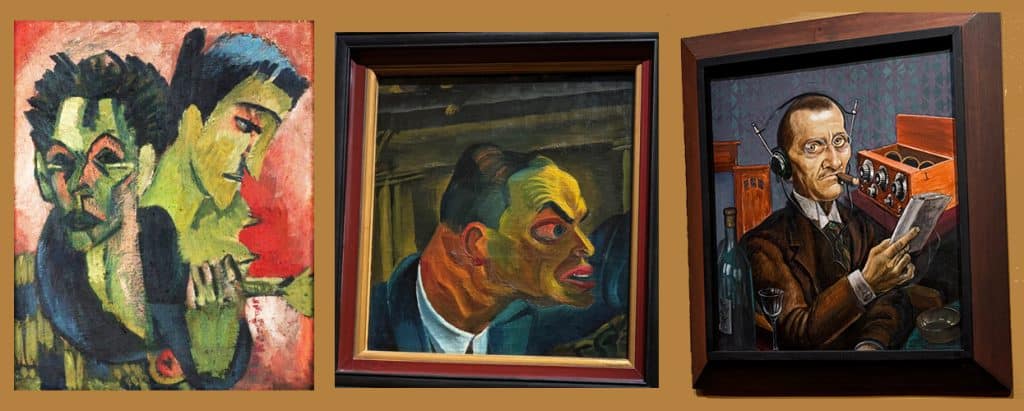
I find the painting on the right interesting, showing the new ground-breaking German radio broadcasting. It became one of the principal organs of Nazi propaganda when they came into power… makes me think of the role of social media in today’s world.
“When Hitler achieved full dictatorial power in 1933, the Nazis made a very public show of turning the clock back, establishing a new ministry of culture and insisting that all professional artists be members of an official organization to control the arts. An advisory body known as the Führer’s Council of United German Art and Cultural Associations declared that art should henceforth be “anchored in the realities of blood and history.” Even more alarmingly, it went on to advise that museum directors and curators who had celebrated Modern art be fired. Many of the artists demonized in the infamous 1937 show—George Grosz, Wassily Kandinsky, Paul Klee—had already left the country in 1933, seeing the writing on the wall.” – from Artnet
When I viewed the gallery below I was struck that all the paintings were considered ‘degenerate art’ and would have been banned by the Nazi government. The Nazi party organized the infamous Degenerate Art exhibition 1937 in counterpart to the concurrent Great German Art Exhibition. What they weren’t prepared for was all the excitement around the exhibition. The Great German Art Exhibition had about 650,000 viewers… in contrast, the Degenerate Art exhibition had a total of over 4 million viewers and was considered the biggest blockbuster art show of all time.
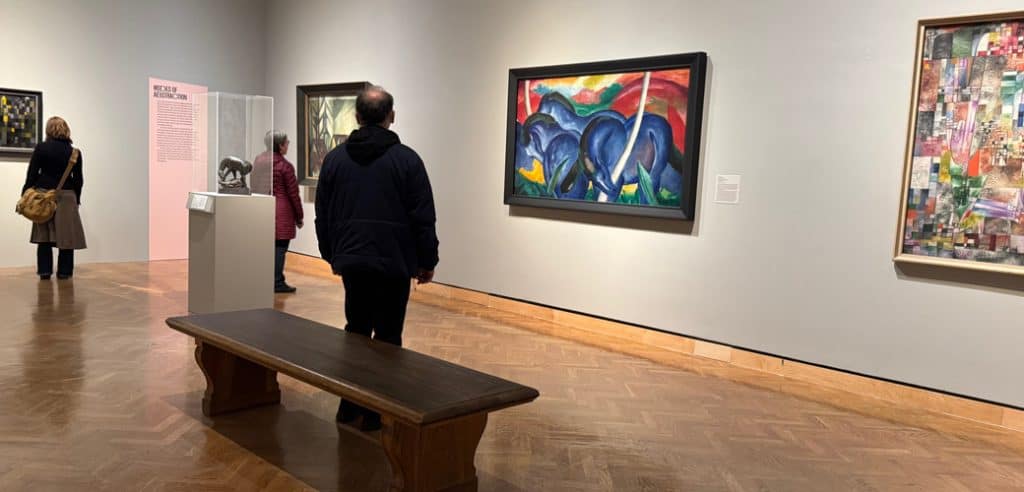
Many of the 70 plus works from the collection of the Neue Nationalgalerie are traveling to the US for the first time.
Modern Art and Politics in Germany 1910–1945: Masterworks from the Neue Nationalgalerie, Berlin
March 7, 2026 – July 19, 2026
Target Galleries, Minneapolis Institute of Art
General Admission $20; Contributor Member+ Free (additional tickets $16); Youth 17 and Under Free
Sharlene Hensrud, RE/MAX Results – shensrud@homesmsp.com