When John Irvine arrived in Saint Paul in 1843 he purchased the Mississippi River’s Upper Landing boat docks and 300 acres of recently ceded Dakota lands and operated a ferry across the Mississippi until a bridge was built. The area was heavily forested at that time, and he spent about 3 years clearing the land around what was to become Irvine Park and preparing it for development.
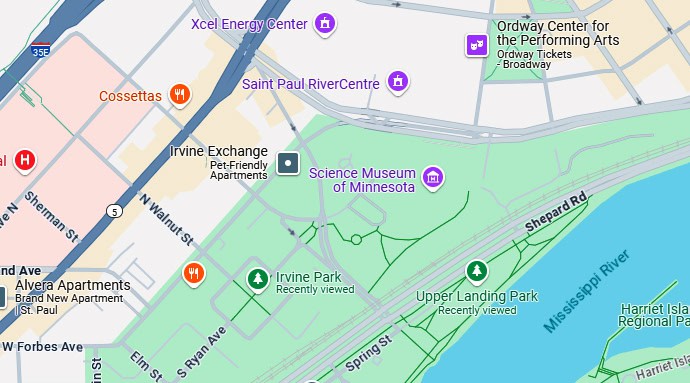
In 1849, the same year the Minnesota Territory was established, he donated the area which is now Irvine Park to the city as pasture land. The area around the public grazing land became one of the city’s first true residential neighborhoods, and the area quickly gathered stately homes for notable families. As immigrants arrived by the hundreds with each steamboat that year, the Minnesota Pioneer reported that 70 buildings were erected in just three weeks that summer.
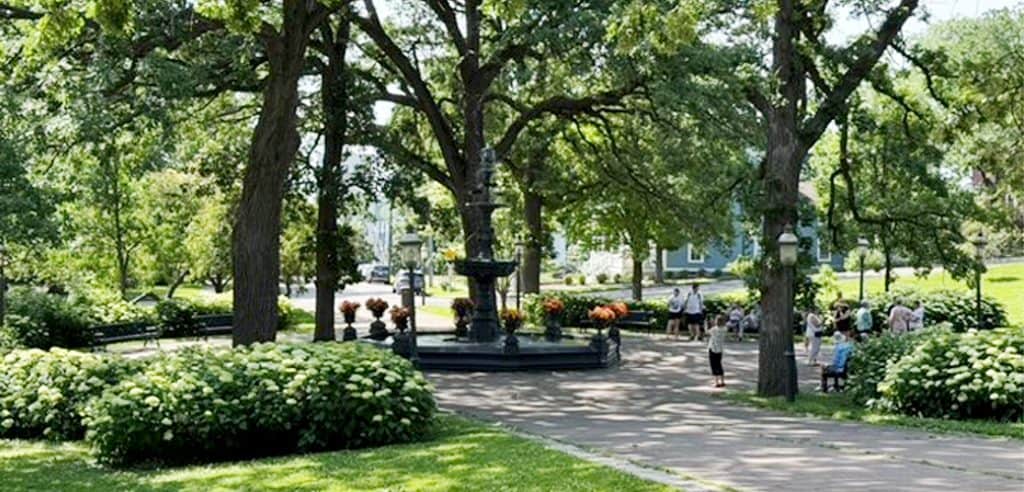
The grazing land eventually gave way to a formal New England style town square, with crossroads radiating out from a central fountain installed in 1881.
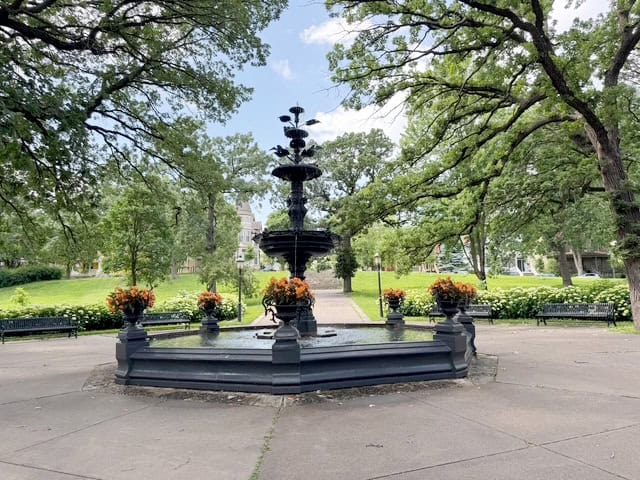
Just before the Great Depression, the fountain was scrapped for a playground and many of the wealthy in the neighborhood moved up the hill to the Summit Avenue neighborhood. This led to a slow decline of the Irvine Park Neighborhood.
When a preservation group was set up in the 1970s over 90% of the homes were uninhabitable and the playground which had taken the place of the fountain was a rusted wasted space. It was then that the city got involved to revitalize the neighborhood and the park was restored with a new fountain loosely matching the old one.
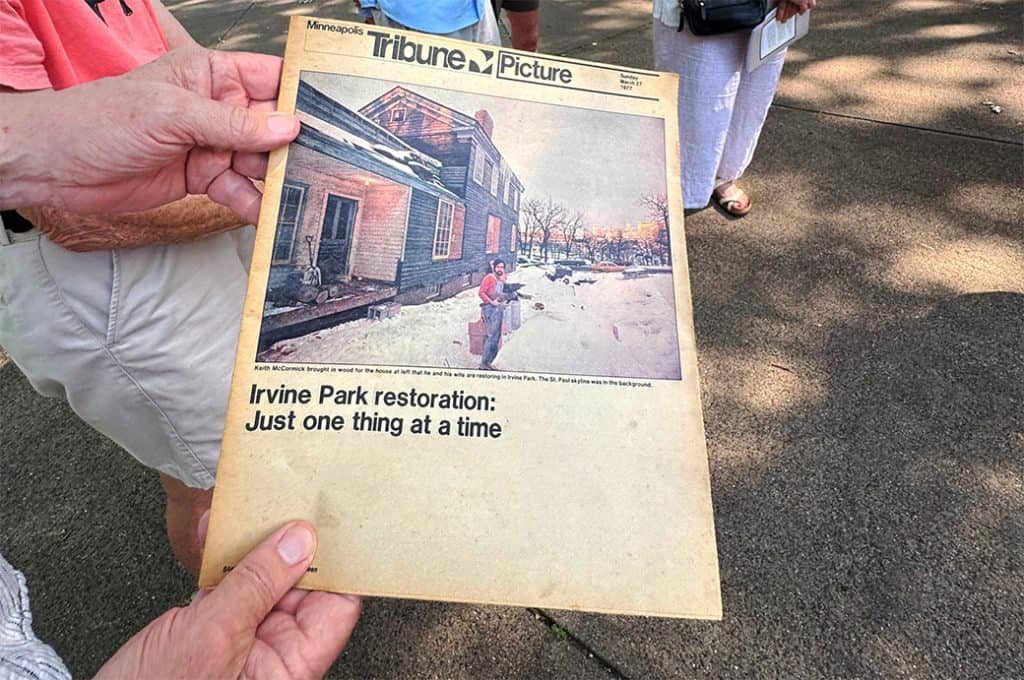
Some homes were torn down, some sold for restoration, and homes in other parts of St. Paul headed for demolition were relocated to Irvine Park, creating a unique historic district.
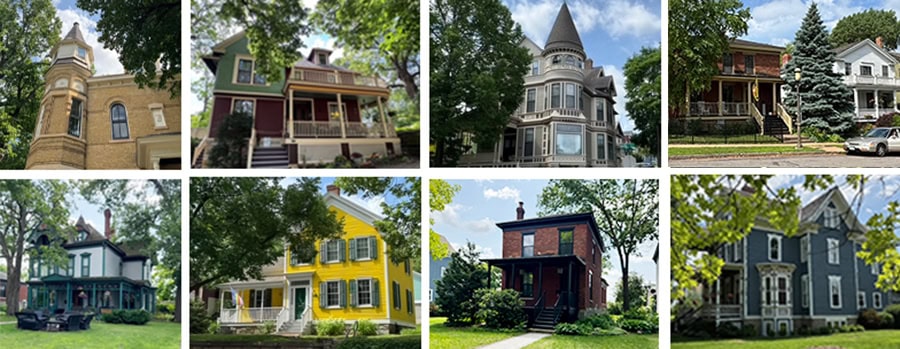
In 1973, the Irvine Park Historic District became one of the earliest districts to be named to the National Register of Historic Places. What makes the district so unique and important is the composite of various periods and styles represented, including styles such as Second Empire, Queen Anne, Stick style, Federal style, Greek revival, Romanesque revival, Italianate architecture and others.
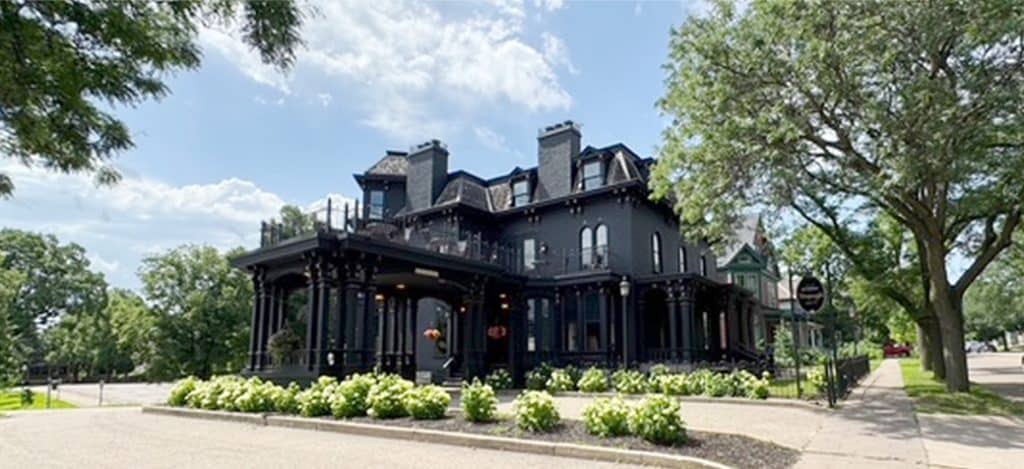
Today, perhaps the best known house in the neighborhood is the Joseph Forepaugh house, built in 1870 and now the home of Forepaugh’s Restaurant, a premier dining destination. Some believe it to be haunted, stemming from the tragic history of its original owner, who had it built when he was only 36 years old. (FYI… we had a fabulous meal there this week and didn’t encounter any paranormal activity!)
With a blend of natural beauty, authentic historic charm, and open space Irvine Park draws residents and visitors to the park to enjoy activities as unique as the city itself. It is one of Saint Paul’s most visited parks, and is Saint Paul’s most popular outdoor wedding ceremony location, nestled in a quiet, shady, residential neighborhood in the Irvine Park Historic District just west of downtown Saint Paul.
Sharlene Hensrud, RE/MAX Results – shensrud@homesmsp.com
RELATED LINKS
- A Brief History of the Irvine Park District – A visual and written history celebrating the people, homes, and timeless charm of Saint Paul’s Irvine Park. Explore the stories that shaped our neighborhood.
📬 Email: irvineparkbook@gmail.com - The Yarnery… nurturing creativity in the Ramsey Hill Historic District – the Yarnery has now moved, but the Ramsey Hill Historic District has not… this post includes a great TPT documentary about the district
- Swede Hollow… in the shadow of St. Paul Brewery in the historic Hamm Brewing buildings – a St. Paul immigrant community from the 1860s