Short answer: A home inspector may identify something that appears to be mold, but determining the presence of mold isn’t required by home inspection standards. At Structure Tech, if we see any suspicious growth, we’ll let you know. If you want a dedicated mold investigation with sampling and lab analysis, that’s a separate service.
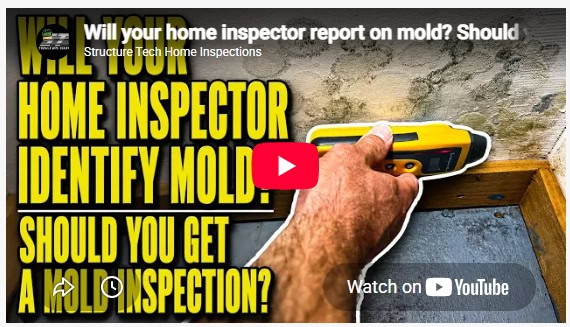
We probably get more questions about mold than any other topic when we book an inspection. We’ve had parents quickly usher their children out of a home after the mere suggestion of mold. On the other end of the spectrum, some people think mold is completely harmless. It’s one of those topics where everyone seems to arrive with a strong opinion.
If you ask ten inspectors about how they handle mold, you’ll get eleven answers.
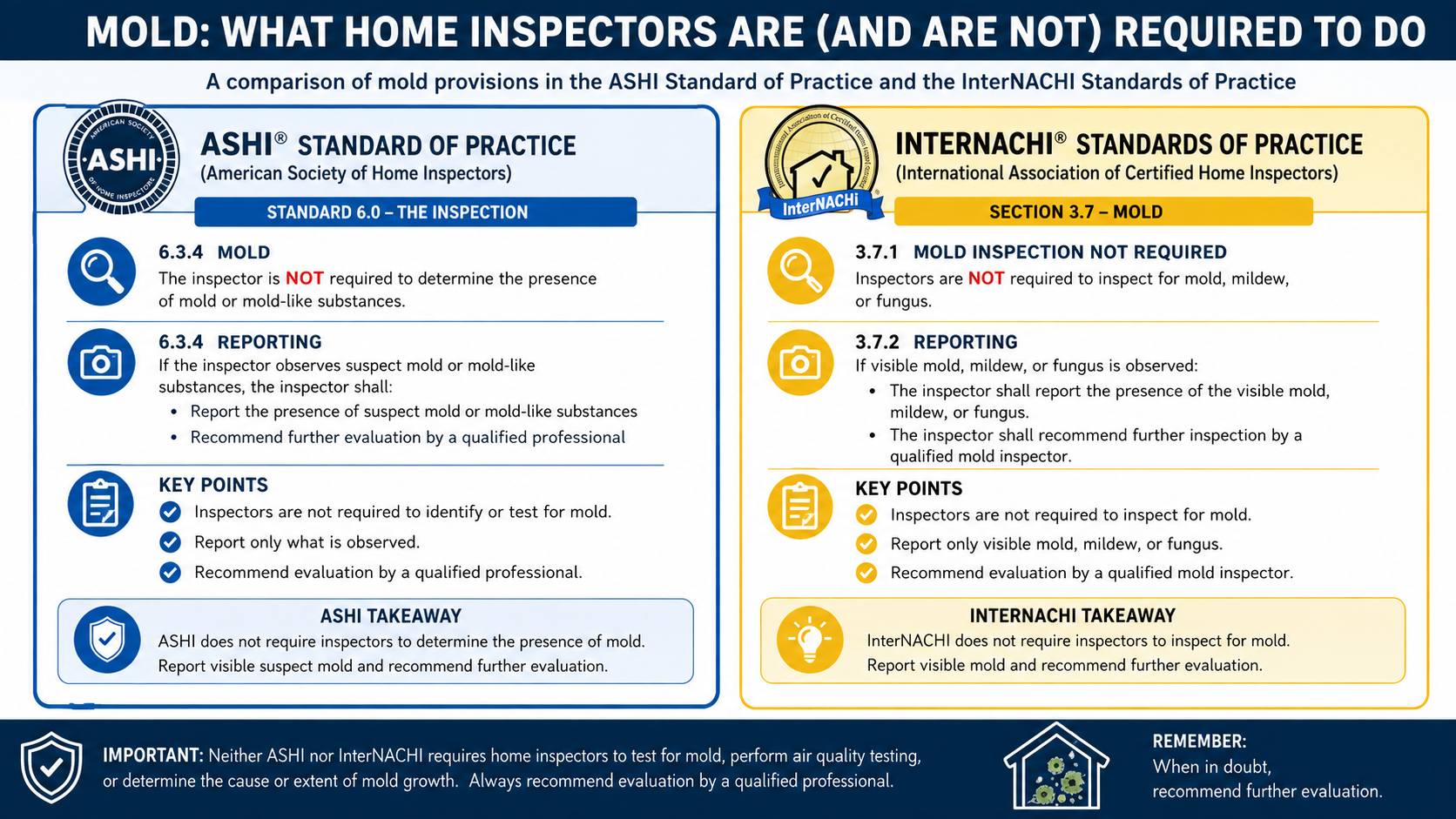
Major home inspection standards don’t require inspectors to identify mold
Both of the major national home inspection organizations make this clear in their standards of practice. The American Society of Home Inspectors states that an inspector is not required to determine the presence of mold or mold-like substances. The International Association of Certified Home Inspectors says the inspector is not required to determine the presence of mold, mildew, or fungus.
Why? Because every house has mold spores. Without exception. Mold spores are everywhere. Every house has them. But mold spores aren’t the same thing as mold growth, and mold growth needs moisture.
We do not conclusively identify mold without testing
If we see anything that looks like mold, we’ll tell you about it.
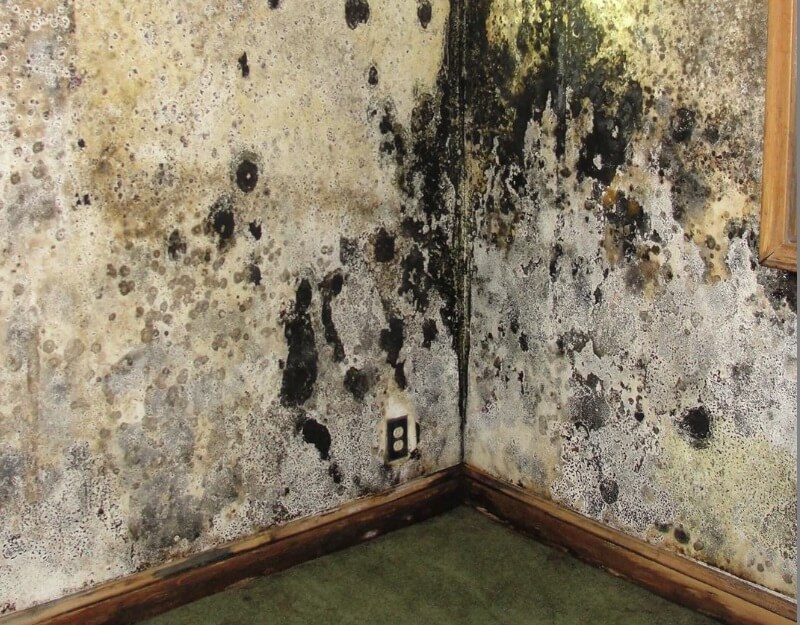
But a standard home inspection isn’t a mold inspection, and we’re not going to identify the type of mold or make laboratory-level claims based on appearance alone.
This doesn’t mean we stay quiet about suspected mold
Just because we don’t positively identify mold, this doesn’t mean we ignore it. If we see something that looks like mold, we say so. But there’s no perfect way to describe it. Here are some problems I’ve run across when trying to safely describe mold:
- Mold: I used to just call a spade a spade. Until I had a client who couldn’t get financing from their lender because I had mentioned a small amount of mold under a bathroom sink because of a leak. It was extremely minor, but the lender didn’t care. The lesson wasn’t that we should hide the condition. The lesson was that words matter, and we shouldn’t make a definitive identification that goes beyond the scope of the inspection.
- Black staining: We used to mention black stains in attics when there were condensation problems. But we’ve had contractors who later characterized the staining as mold come behind us and say that attics were covered in mold, and that we should have called it out. And then our clients believe we were negligent for not telling them about mold.
- Suspected mold/appears to be mold: This is the way we currently describe something that looks like mold. And we know it when we see it. But even so, nothing is perfect. I recently had a real estate agent demand that we remove the word “mold” from our report because he didn’t want it to cause any potential problems for his client in the future.
This is why there’s no magic terminology. Call it mold, and someone thinks you’ve gone too far. Staining, and someone thinks you didn’t go far enough. Suspected mold, and someone wants the word “mold” removed altogether. Our job isn’t to make everyone happy. It’s to accurately describe what we observed.
But still. One of the most common problems we find in homes of every age is unwanted water. Roof leaks, plumbing leaks, basement moisture, condensation, attic frost… the list goes on. And where there’s persistent moisture, there’s an opportunity for mold growth. That’s why we’re much more interested in finding and explaining the water problem than arguing over exactly what to call a fuzzy spot on the wall.
Should you get a mold inspection?
In addition to standard home inspections, we also offer mold inspections. These are conducted by a Council-certified Residential Mold Inspector (CRMI) and include lab testing.
I don’t think every home buyer needs a mold inspection. If I did, we’d push them the way we push sewer inspections and radon testing. But a mold inspection can make sense when there’s a known or suspected mold problem, a history of significant water intrusion, unexplained musty odors, or simply a buyer with heightened concerns about mold and wants more information than a standard home inspection can provide.
And testing isn’t magic. There are no federal pass/fail limits for airborne mold concentrations, so mold test results need to be interpreted in context with the building, moisture conditions, and what we observed during the inspection.