
One of the most common window and door issues that come up during a home inspection is fogged glass, also known as a broken seal. But they’re not the same thing: a failed seal can cause fogged glass, but there is no visible evidence of a failed seal in the early stages. Because of this, home inspection standards don’t require home inspectors to report on failed window seals. Oftentimes, there’s just no way for the home inspector to know about this.
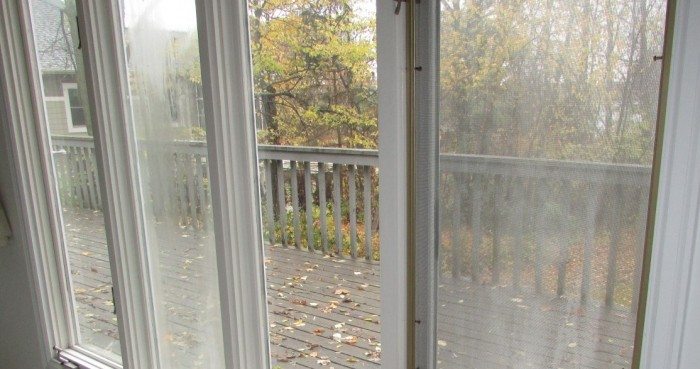
Just in case you don’t know what I’m talking about, check out the photo below. Two of those four window panes have badly fogged glass.
What’s a failed seal?
All modern windows have insulated glass (IG) units, which are basically a glass sandwich with gas in the middle. Most are double-pane, but the really fancy ones are triple-pane. Older units might have air in the middle, but newer units have argon or krypton gas to reduce heat transfer. Or to put it more plainly, to improve the insulation. For an excellent discussion of all things related to window efficiency, check out Window Replacement Part 1: The Dog and Pony Show Comes to Your House.
When the gas (or air) is properly sealed within your glass sandwich, we say the seal is intact. When the gas leaks out, and humid air replaces it, we call this a failed seal.
What’s the problem with a failed seal?
When an insulated glass seal fails, there are three things you might see when looking through the glass:
- Nothing different
- Condensation
- Dirty/hazy glass
Let’s break those down. Nothing different: In the early stages of seal failure, you won’t know anything has happened. A desiccant around the perimeter of the glass unit will help to prevent moisture in the air from filling the space between the two pieces of glass. This will keep the glass looking just fine, at least for a while. Again, this is why home inspection standards exclude the identification of failed window seals.
Condensation: In the very early stages of seal failure, humid air gets between the panes of glass. As long as it doesn’t condense, you’ll never even know it’s there. But once you get a quick change in outdoor temperature, you’ll get condensation between the panes of glass. This will look like a very small patch of moisture, and it’ll probably evaporate.
The photo below, from my own house, shows a nice example of this:
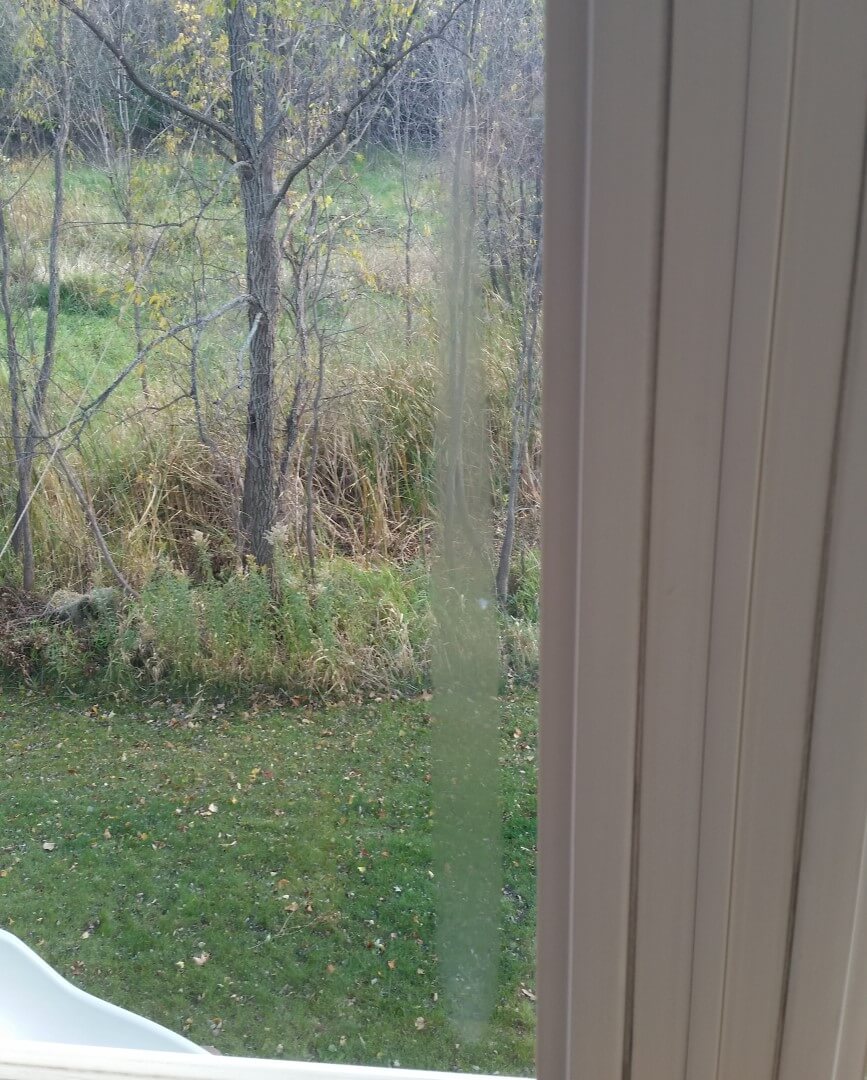
This window looks perfectly fine most of the time, but every once in a while, I’ll see a band of condensation appear between the panes of glass. It only lasts for a few hours, then it evaporates.
Dirty/hazy glass: Over time, repeated evaporation of water inside the window leaves behind a thin layer of minerals you can’t see. But after enough cycles, you’ll start to see these minerals, which make the glass look permanently dirty. The photo below shows another window in my house with some faint, annoying deposits. I added a few arrows to the image to highlight this area.
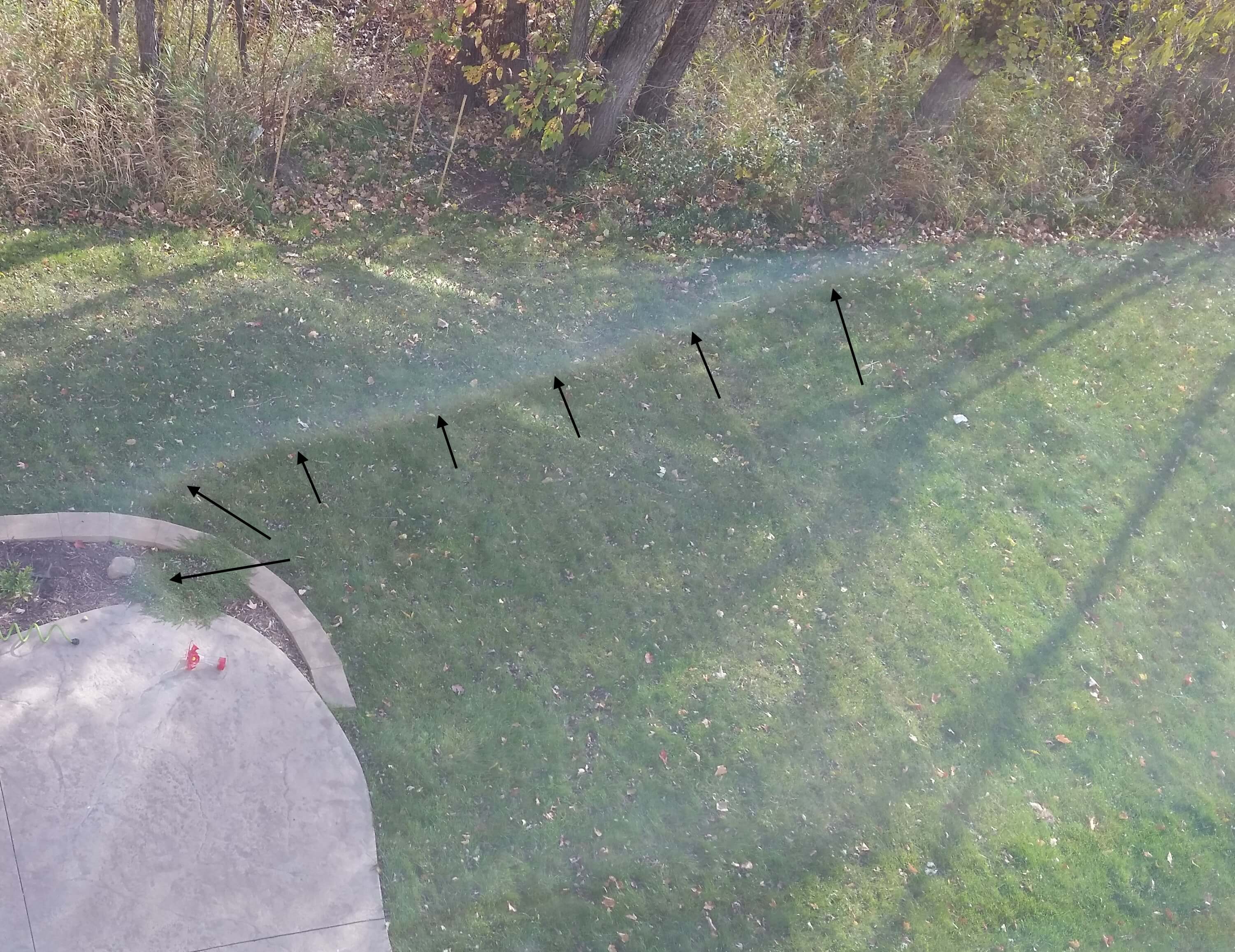
We generically call this fogged glass. It refers to a window with obvious evidence of a failed seal.
When insect screens are present or when the glass is dirty, fogged glass like this probably won’t be visible. That’s another reason that home inspection standards of practice don’t require identification of failed seals. When we inspect a home with numerous panes of fogged glass, we tell our clients there’s no way we can catch every one, especially if the windows aren’t perfectly clean.
Why does fogged glass matter?
A closed window has two jobs: let in light and allow you to see out. When a window is so obscured by condensation or mineral deposits that you can’t see out of it, it can’t do its job. That’s it. It’s not going to lead to crazy-high energy bills, it’s not going to lead to rot or condensation inside the walls… it just looks bad. It’s a mostly cosmetic nuisance, and it’s never a critical repair item.
What to do about fogged glass
The fix for fogged glass is to have the insulated glass units replaced. Most window manufacturers have a 20-year warranty on the glass units, but this doesn’t cover labor. To see the repair process for replacing insulated glass units, check out my blog post on this topic. I had a company replace about twenty failed units at my last house in 2015, and I documented the process: Repairing fogged glass. If you’re feeling ambitious and would like to try it yourself, The Family Handyman has instructions here: “How To Replace Insulating Glass.”
Reuben Saltzman, Structure Tech Home Inspections