
There’s a lot of confusion in real estate over what constitutes an intrusive inspection or intrusive testing. Today, I’ll set the record straight on the definition of an intrusive inspection and discuss several possible scenarios. But first, let’s take a quick step back to fully understand what I’m talking about.
The Official Definition for Minnesota
Most of the people who buy a home in Minnesota use the same purchase agreement from the Minnesota Realtors® Association. This form has a big heading, typically on page four, saying INSPECTIONS. Under this section, the buyer can elect to have a home inspection (or not), the purchase can be contingent upon the inspection (or not), and the seller may allow intrusive testing (or not). Most likely not. There’s also a short sentence that defines “Intrusive Testing”. This is very important.
For purposes of this Purchase Agreement, “intrusive testing” shall mean any testing, inspection(s), or investigation(s) that changes the Property from its original condition or otherwise damages the Property.
There. That’s it. If you change or damage a property, it might be intrusive. If you don’t change or damage a property, it’s not intrusive. Now, let’s cover some common home inspection situations that are not intrusive.
Non-Intrusive Inspection Methods
Removing an electric panel cover is standard practice for home inspectors throughout most of the country (except Rhode Island). The only possible exception to this would be an old panel cover with thirty coats of paint on the seam. In these cases, the home inspector would need to use a knife to carefully cut a seam between the panel cover and the wall. This “changes” a property, so the home inspectors here at Structure Tech are careful to get written permission from the seller before doing this.
Removing an attic or crawlspace access panel that is screwed shut is another thing we do. It’s a hassle, but it does not damage or change the property.
A sewer inspection is also not intrusive. Nothing is damaged, and the property doesn’t get changed… most of the time. Every once in a while, if a sewer cleanout cover is rusted shut, we need to cut it off to gain access to the sewer. But we come prepared with new, tight-fitting sewer cleanout covers that are far superior to the old ones, and we do this upgrade for no charge. Nobody has ever complained about this, because any other alternative would be time-consuming and expensive for the buyer or the seller.
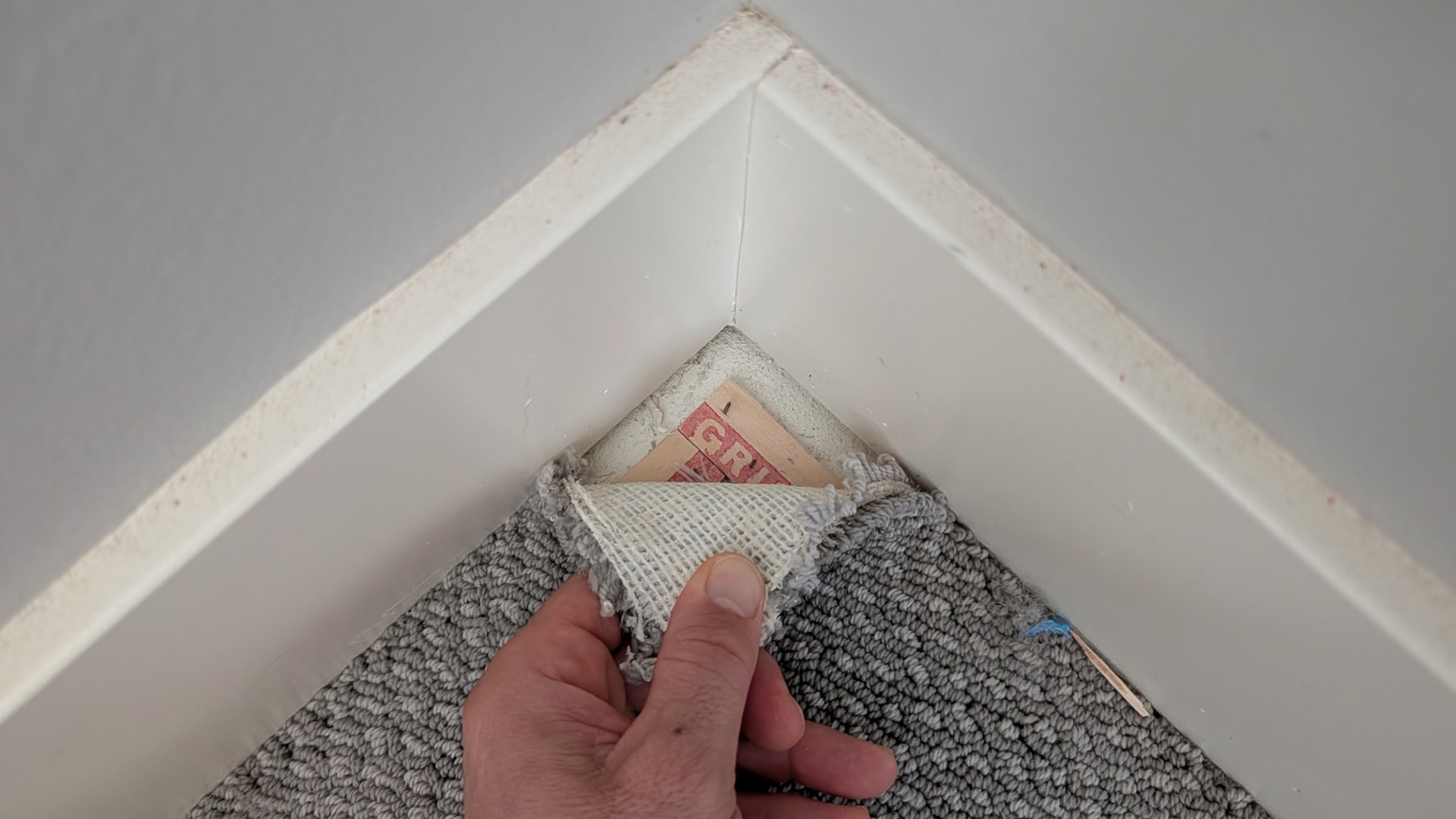
Pulling back a couple of inches of basement carpet is not intrusive, as long as it’s done in a corner and we leave no evidence that it was done. We regularly do this to look for signs of basement water intrusion, which is a major concern for homebuyers.
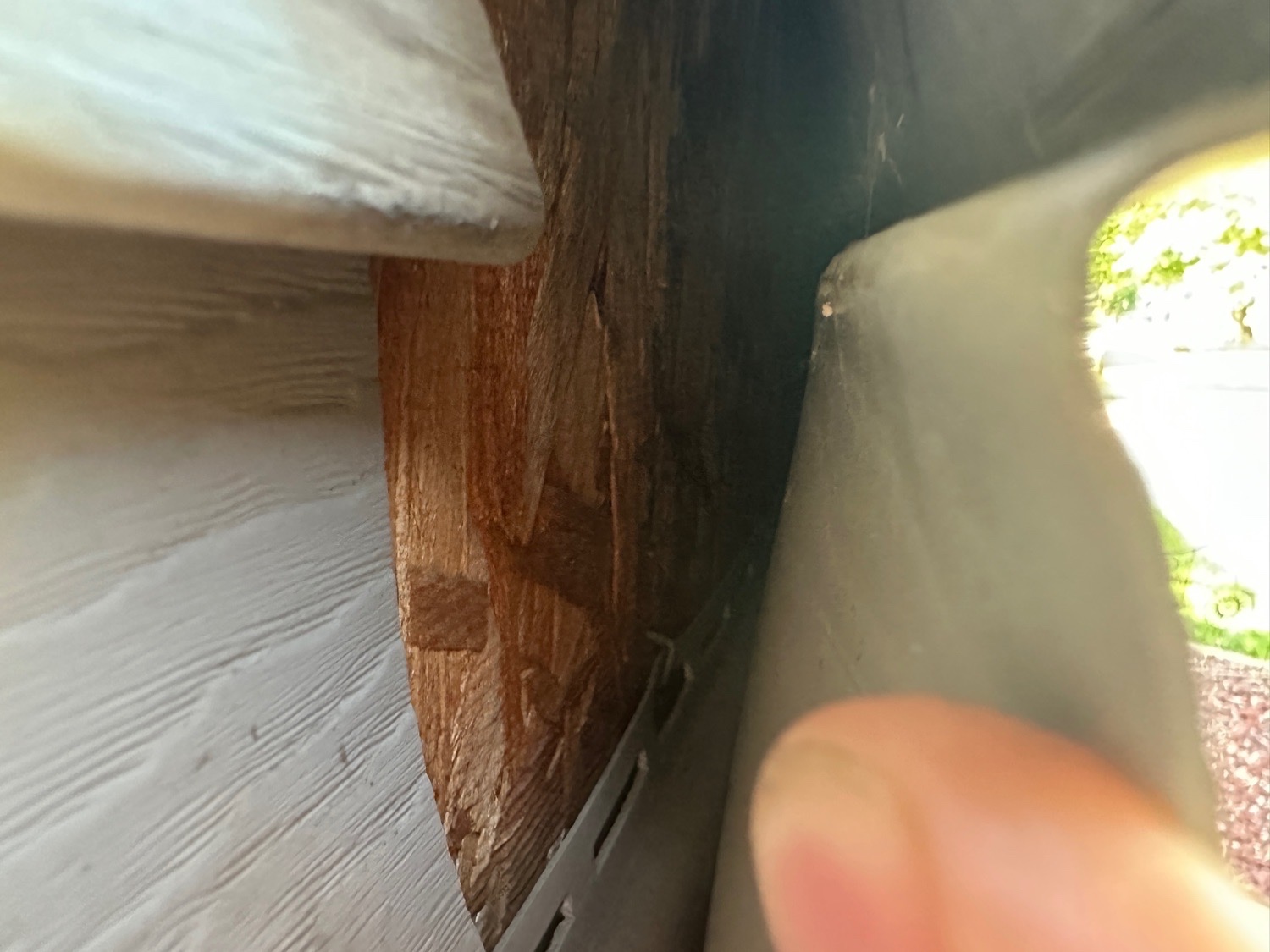
Pulling back vinyl siding to verify the presence of a water-resistive barrier (WRB). When vinyl siding is installed without a WRB, the risk of water damage is higher. We do this on all vinyl-sided houses without causing damage or changing anything.
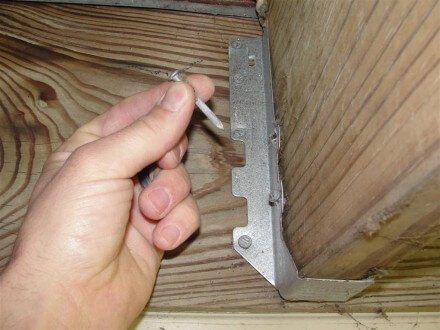
Removing a joist hanger nail is something we regularly do to verify proper nails were used. When proper nails are used, we can’t pull the nail. But when the wrong nails are used, we can pull them out simply by grabbing on the head of the nail with a pliers or using a mini pry-bar. If we can pull the nail out, it’s wrong. We document it with a picture and tap it back into place… even though improper cross-shear nails are doing absolutely nothing. And of course, this does not cause damage, and nothing is changed.
Removing the access covers on furnaces is also a standard home inspection procedure that I’m pretty sure every home inspector in the country performs daily.
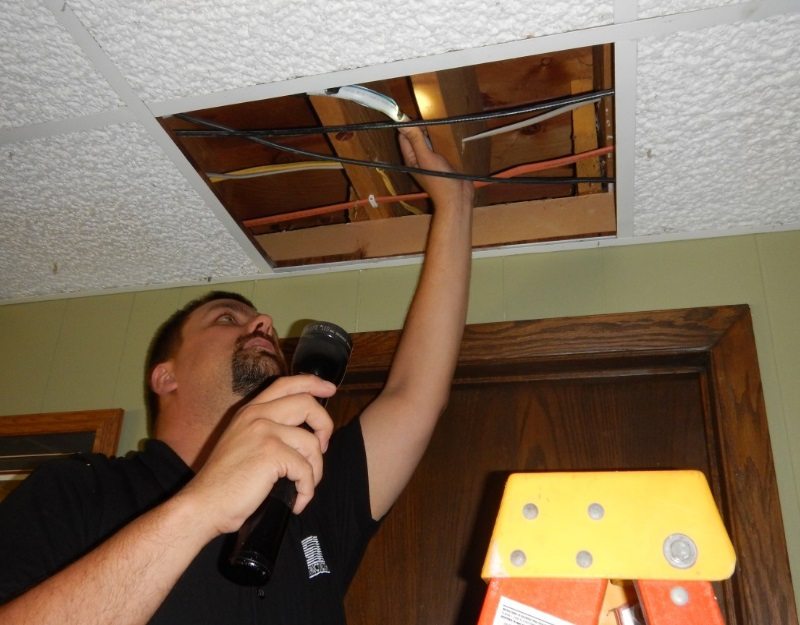
Lifting ceiling panels is not intrusive as long as the inspector can put stuff back exactly the way it was. If an inspector breaks a ceiling tile or can’t put stuff back together when they’re done… sorry, but now I’d call that intrusive. But for the record, home inspectors are not required to lift ceiling panels.
Now that I’ve reviewed several Non-Intrusive inspection methods and techniques, let’s look at a few Intrusive methods.
Intrusive Inspection Methods
Intrusive moisture testing is the most obvious intrusive thing we do. Most of this is done on homes with stucco siding, and requires us to drill many pairs of 3/16″ holes in the stucco. We patch the holes with caulk of a matching color, so many times it’s impossible to know we ever tested the house without carefully looking for evidence… but still. This is a very specialized inspection that we can only do after the seller has given us explicit permission. Even if a seller has allowed intrusive testing as part of the purchase agreement, they need to sign a special permission slip from us as well.
Opening a sealed attic access panel is also intrusive. While we can often do this without leaving any evidence, we’ve still changed the property from its original condition. When we come across a sealed attic pane, we immediately attempt to get written permission from the seller to open the panel. I’ve blogged on this topic many times; click this link for more on attic inspections.
Removing something that is nailed in place is probably intrusive. I’m mainly talking about attic access covers, crawlspace access covers, and the like. It’s almost impossible to remove a cover that’s nailed in place and put it back exactly as it was.
Anything involving a saw is intrusive. And the same probably goes for a hammer or a drill.
Summary
If an inspection method does not change or damage a property, it’s not intrusive. If something is accidentally damaged during the inspection, does this make it an intrusive inspection? No, of course not. It just means the inspector better take care of it.