
The 2025 US housing market was challenging…
- Mortgage rates remained elevated compared to recent years
- Home prices continued to increase
- Demand outpaced the supply of homes for sale
- Fewer buyers were able to keep up with rising costs
- By mid-2025, first time homebuyers accounted for just 21% of all home purchases
- Typical age of a first-time buyers reached a record high of 40
- Median age of all buyers was 59
- Homeowners set a new records, staying in their homes a median of 11 years before selling
- Home values remained roughly 50% higher than pre-pandemic levels
In the Twin Cities market, new listings and closed sales both increased for the third year in a row, but new listings increased 3.8% while closed sales increased 2.3%
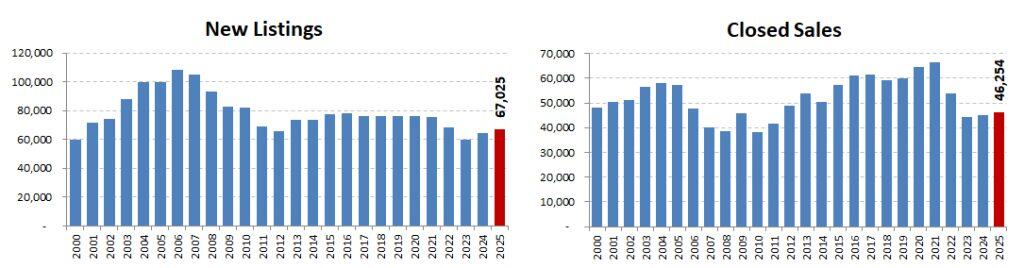
This resulted in a drop of 3.9% in total homes available for sale at the end of the year. After increasing every month through October, both November and December 2025 inventory dropped compared to 2024.
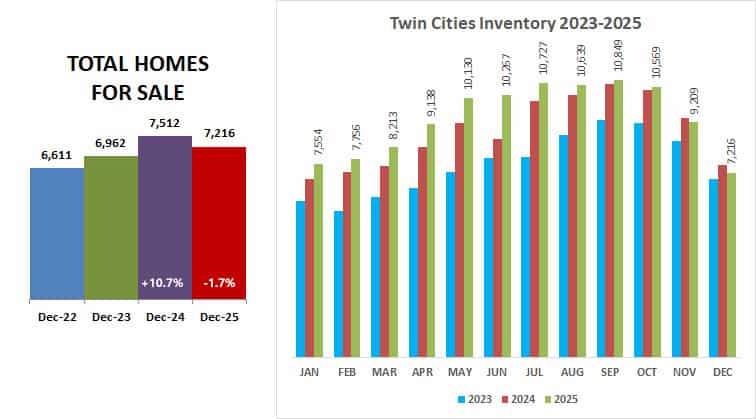
After years of falling inventory, the number of homes inched up in 2022, 2023 and 2024… only to inch down again in 2025.
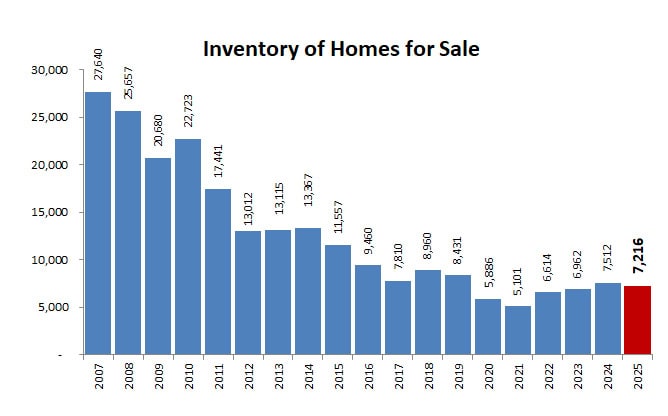
Showing activity has been falling since its peak in 2021, and 2025 showings were even lower than in 2019 before the pandemic. Homes received an average of 9 showings before pending.
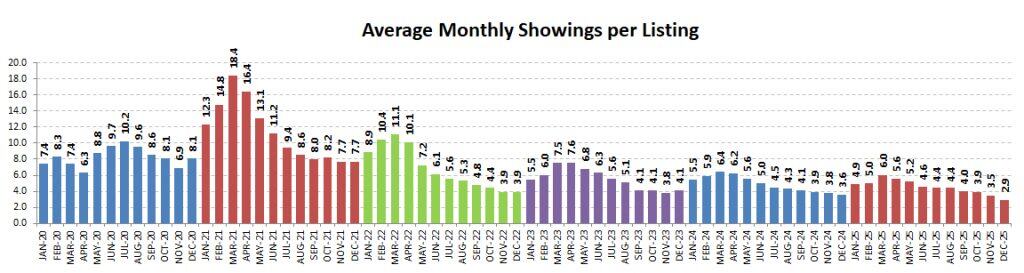
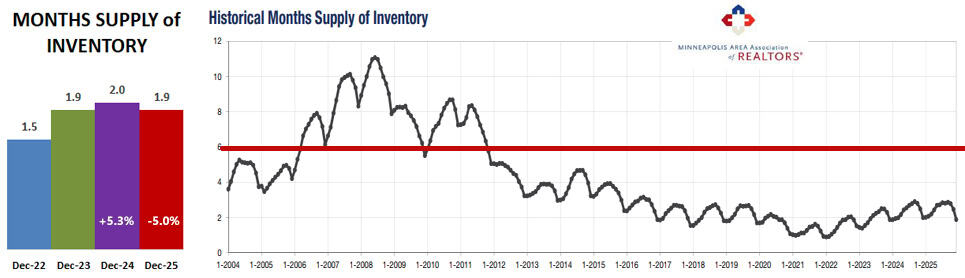
Months supply of inventory takes into account not only the number of homes for sale, but also the rate at which they are being sold. The red line on the graph below shows the point at which the market is balanced between buyer and seller, about 5-6 months. It has been a buyer’s market since 2012, and the months supply in 2025 increased each month through July compared to 2024, held steady August-November, then fell 5.0% below December 2024 at the end of 2025 with a 1.9 month supply.
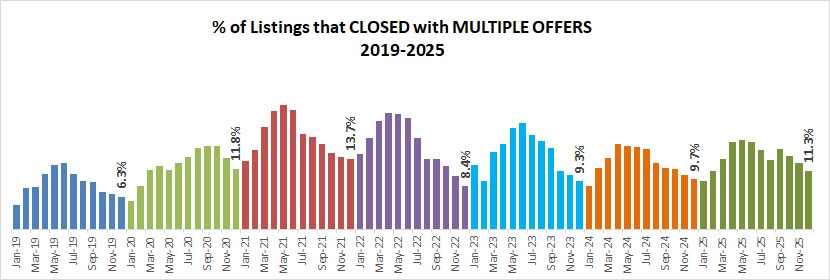
The low supply of inventory meant more listings closed with multiple offers than in 2024. At least 11.3% of MLS listings closed with multiple offers (as measured by listings that noted multiple offers) the highest percentage since 2021.
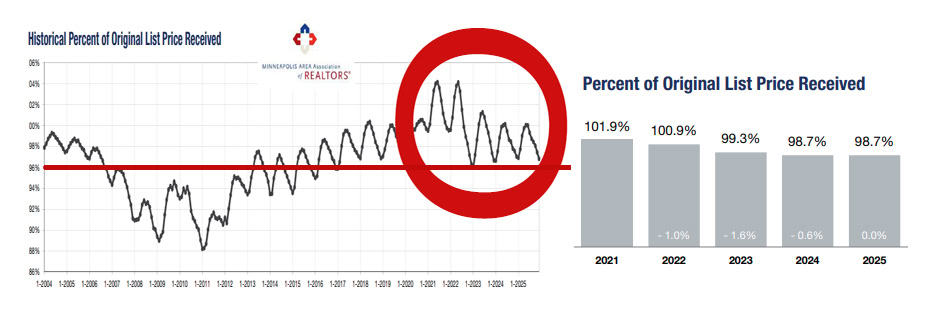
Average percent of original list price received peaked in 2021 at 101.9%. As you can see in the circled area, the percent jumped up in 2021 and stayed over 100% in 2022 before falling after the change in interest rates. 2023 was a transition year at 99.3% of list price. 2024 and 2025 were almost identical and both averaged sales at 98.7% of list price.
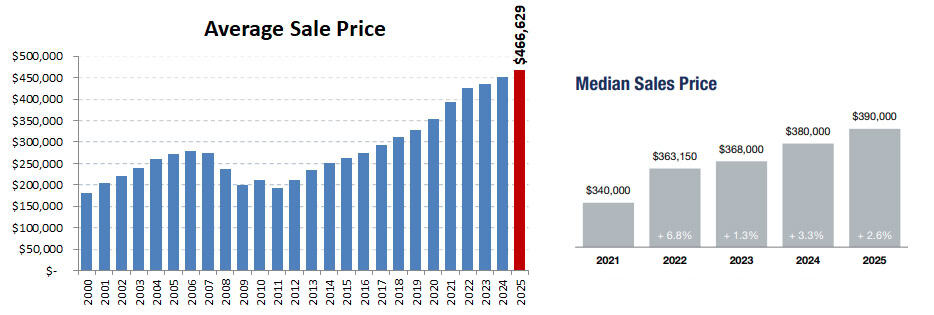
This is how prices continue to increase, with 2025 average sale price at $466,629, the highest in 25 years. Median sales price for 2025 was $390,000, 2.6% over 2024.
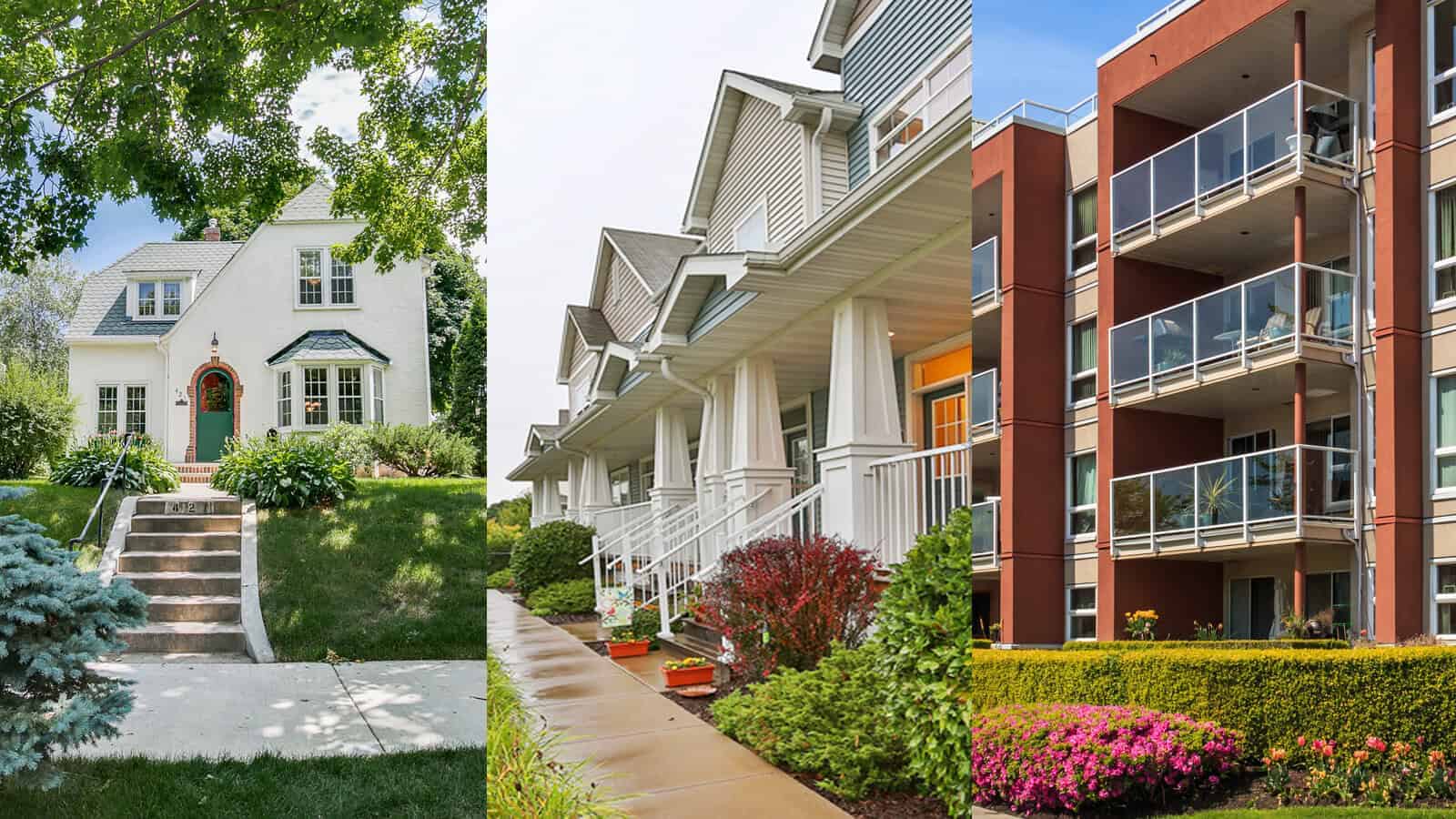
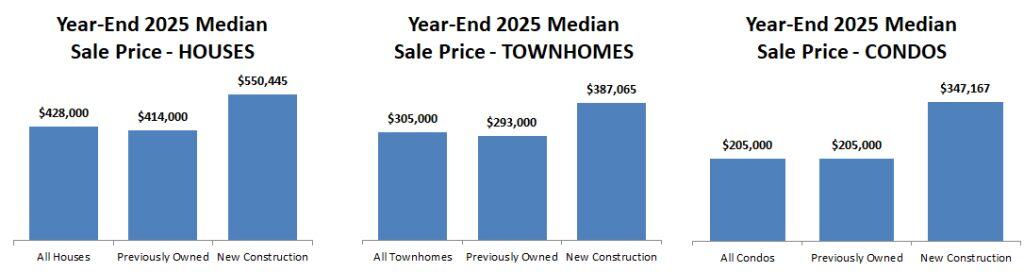
Year-end median sale prices varied by style and construction status, with overall median house prices at $550,445, townhouses at $387,065 and condos at $347,167.
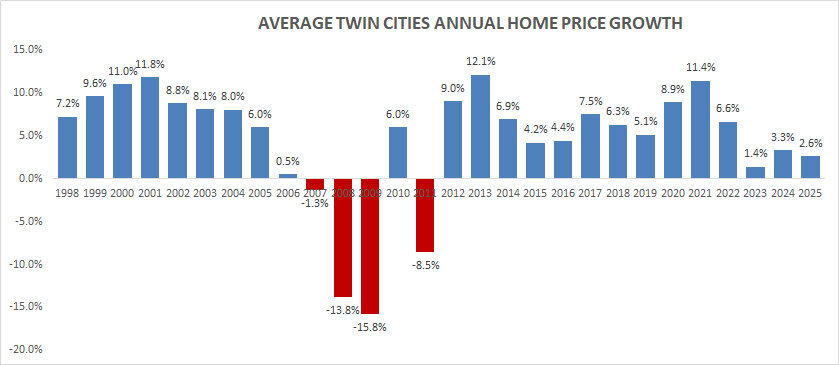
Historically, Twin Cities home price growth has not been consistent, but the only period we showed negative price growth was around the market crash, most notable in 2008-2009 when it was in the double digits. Home value appreciation was 2.6% in 2025, and predictions are that 2026 will be a year of stabilization and recovery rather than dramatic change.
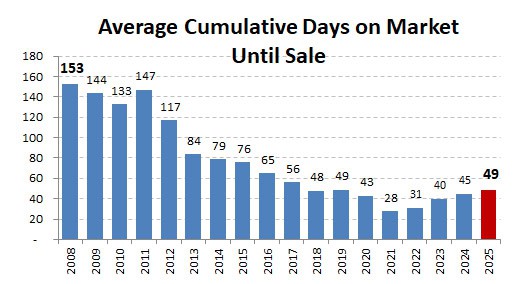
Average cumulative days on the market before pending continued to rise to 49 days in 2025, the level it was in 2019 right before the pandemic.
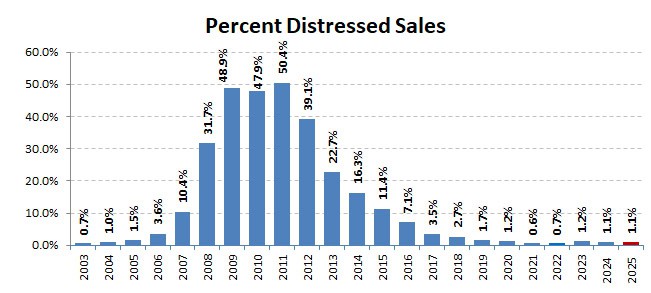
Percent of distressed sales (foreclosures and short sales) in 2025 continued to be historically low at 1.1%, the same as in 2024. It is hard to believe that in 2011 more than half of the sales were short sales or foreclosures.
Monthly supply of homes available for sale varied by price range, construction status and housing type. What struck me was how much the supply has changed in the last 10 years. In the side-by-side comparison below, note how dramatically the shape has changed. In 2015 homes priced over $1M had the most months supply, at 12.8 months – in 2025 there was only a 3.8 months supply of homes for sale over $1,000,000.
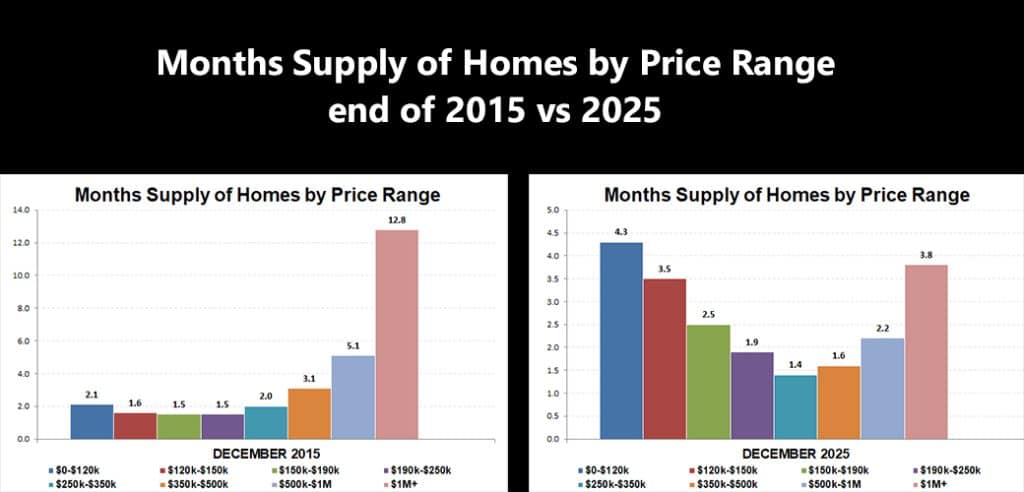
The supply of homes available for sale under $120k was only 2.1 months in 2015 and more than double that at 4.3 months in 2025. Some of that is attributable to an expanded market area in the MLS, with more outstate properties at lower prices but the change in distribution of the price of homes for sale is notable.
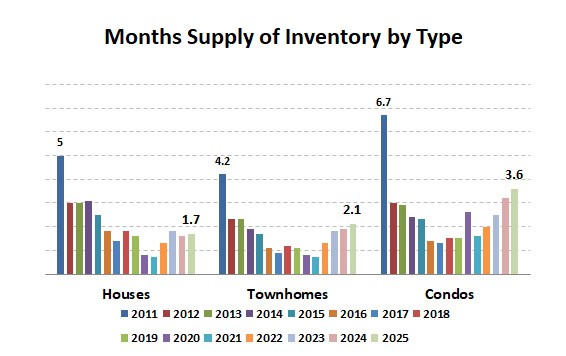
All property types favored the sellers, with growth in supply for all types. Note how the months supply of condos is growing faster than for houses or townhomes.
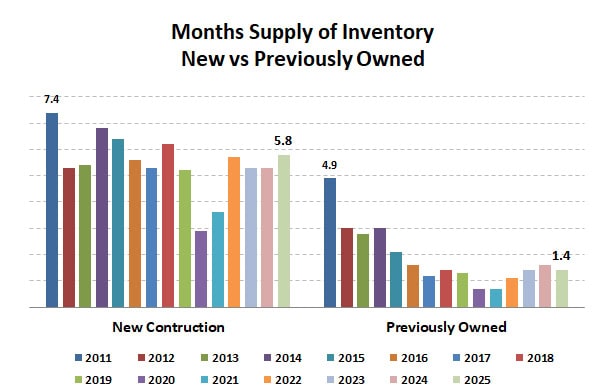
There is a much greater supply of new construction than previously owned homes.
Economists are projecting a more active housing market in 2026… time will tell. As inventory builds sales volume is projected to also increase. The biggest factor will be affordability, the factor that continues to drive home prices up.
2026 is expected to be a year of stabilization rather than change.
The figures above are based on statistics for the combined 13-county Twin Cities metropolitan area released by the Minneapolis Area Association of Realtors.
Never forget that all real estate is local and what is happening in your neighborhood may be very different from the overall metro area.
Sharlene Hensrud, RE/MAX Results – shensrud@homesmsp.com
RELATED POSTS